Sherpa Communications
awareness campaign services

Shaffra advances Autonomous AI Teams with launch of enterprise AI Project Manager

UAE, September 7, 2026:  Shaffra, the GCC-born AI Workforce Platform building Autonomous AI Teams for enterprises and governments, has launched the GCC’s first enterprise-grade AI Project Manager, an AI employee designed to coordinate workflows, monitor project progress, automate follow-ups, identify delivery risks, and improve operational alignment in real time.

Built within Shaffra’s Autonomous AI Teams architecture, the AI Project Manager marks a major step in moving enterprise AI beyond individual productivity tools and into governed workforce infrastructure across the GCC. The launch aligns with the regional AI momentum, including the UAE Strategy for AI 2031, which aims to position the UAE as a global AI leader, and KSA’s designation of 2026 as the Year of Artificial Intelligence.

The AI Project Manager operates as an execution intelligence layer inside enterprise environments, helping organisations manage complex workflows where delays, missed follow-ups, unclear ownership, and poor coordination can affect delivery. While 58% of employees globally report using AI at work on a semi-regular or regular basis, PwC’s Survey found that 75% of regional respondents used AI in their jobs in 2025, reflecting the region’s growing readiness for enterprise-grade AI employees.

Alfred Manasseh, COO and Co-Founder of Shaffra, said: “AI adoption is accelerating faster than previous technology waves, and the Middle East is already ahead of the global curve in bringing it into the workplace. The next phase for enterprises will be defined by AI employees that can support structured work inside real operating environments. Shaffra’s AI Project Manager is built for this shift, helping organisations turn AI into a governed workforce layer that supports coordination, accountability, and scale.”

The AI Project Manager monitors project activity, tracks tickets and dependencies, identifies delays, follows up with stakeholders automatically, and helps teams identify and escalate operational risks before they affect delivery timelines.  It can be deployed in minutes through the Shaffra AI Workforce Platform and integrates with enterprise systems, including project management tools, ticketing platforms, communication systems, CRMs, and operational databases.

Through the platform, enterprises can create the AI employee by selecting the Project Manager role, then upload relevant knowledge such as project documentation, internal processes, and client requirements. Teams can define the employee’s personality, including tone and working style, before configuring project priorities, escalation rules, and communication instructions. Once connected with tools such as JIRA, the AI Project Manager can begin managing coordination, follow-ups, and progress tracking across active workflows.

The launch strengthens Shaffra’s broader roadmap for Autonomous AI Teams, where AI employees operate with defined roles, access rights, governance controls, and measurable responsibilities inside enterprise environments across sectors such as government, real estate, healthcare, banking, and retail. Following more than 2 million work hours saved in 2025 through its Autonomous AI Teams, the AI Project Manager adds a new execution-focused capability to the Shaffra AI Workforce Platform, helping organisations reduce operational noise, improve visibility, and build more accountable, scalable ways of working where pressure is highest.

Qashio to guide travel companies on finding growth beyond bookings at ATM 2026

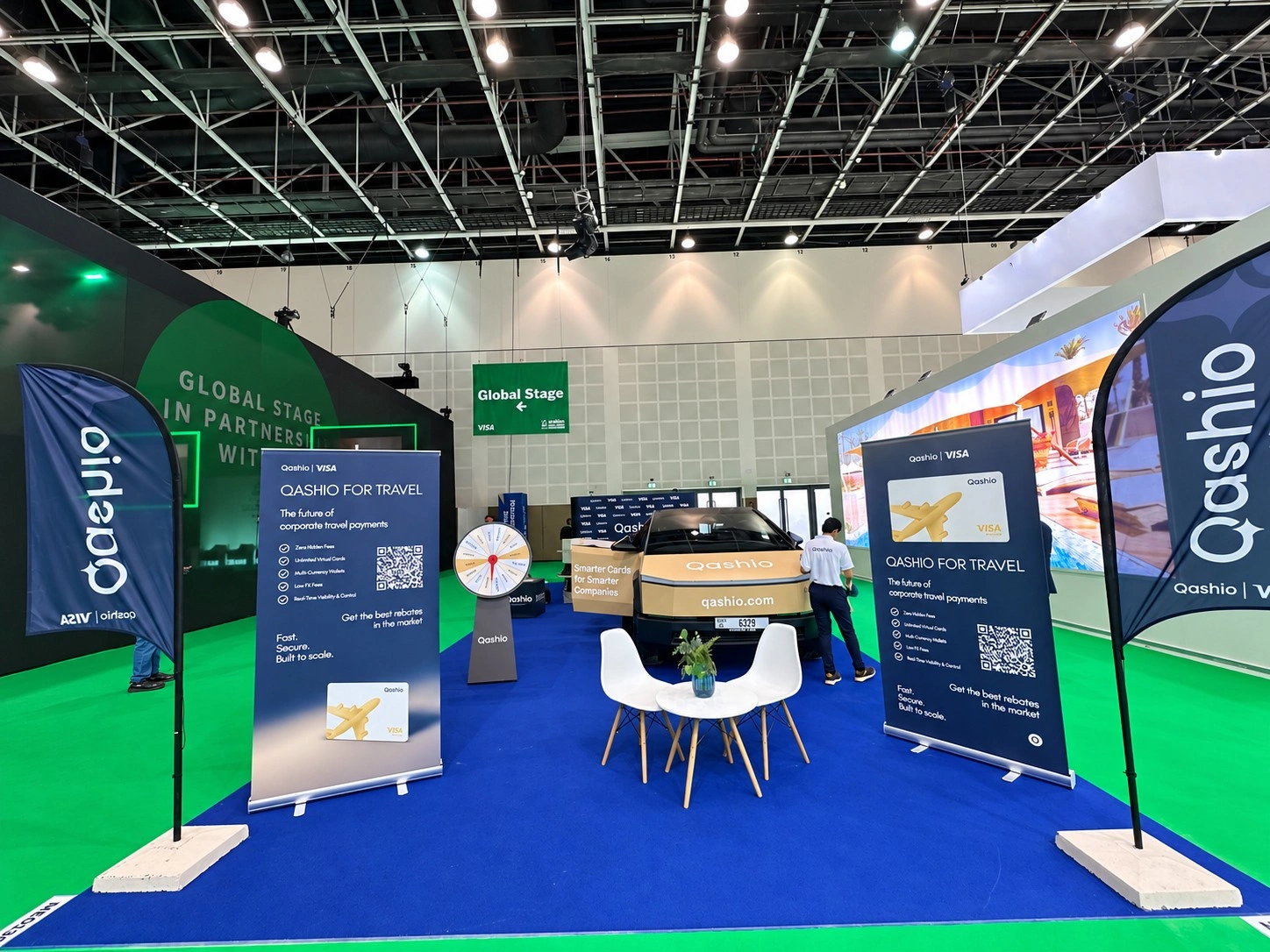
Dubai, UAE, 07 September 2026: For travel companies, growth has traditionally been tied closely to booking volume. When demand becomes harder to predict, and competition puts pressure on margins, businesses also need to manage their existing payments and costs as efficiently as possible. Qashio, the MENA region’s leading spend management solution, will address this challenge at Arabian Travel Market 2026, taking place from 14–17 September at Dubai World Trade Centre. The company will demonstrate how smarter payment and spend management can help travel businesses strengthen financial control and find additional value within their existing operations.

Dubai’s hospitality market is expected to regain momentum during H2 2026, particularly in Q4 as international air connectivity improves during the winter travel season. Travel businesses preparing for recovery need to manage booking costs while building capacity to meet returning demand. Each reservation can involve multiple supplier payments across currencies and markets. Finance teams must issue cards and reconcile transactions quickly while tracking cash flow and maintaining controls, without slowing down bookings or eroding margins.

Qashio for Travel simplifies this complexity through temporary cards created for individual bookings and bulk card issuance, allowing finance teams to respond quickly while maintaining effective controls. Lower foreign exchange rates help reduce the cost of paying international suppliers, while real-time transaction data and automated reconciliation provide clearer visibility over cash flow throughout the booking cycle. The platform supports online and traditional travel agencies, alongside destination management companies and corporate travel teams.

“Travel operates fast, with high volumes of transactions, often across multiple suppliers and currencies, that leave teams little room for delays. Qashio for Travel helps improve this daily workload so agencies can scale their business without increasing admin tasks, while their teams can focus on developing customer and supplier relationships. We are building financial infrastructure that helps travel companies grow across international markets with the visibility and discipline required for sustainable growth.  At ATM, we want to understand where travel leaders see the greatest obstacles in their operations and show how our solution can help,” said Armin Moradi, Chief Executive Officer and Founder of Qashio.

Qashio will also showcase Qashio Corporate Travel, which expands its travel offering by bringing company cards, travel bookings and expense management into one system. Businesses can book from an inventory covering more than 200 airlines and 1.5 million hotels, with each expense automatically categorised and reconciled. The platform provides price-matched fares, exclusive corporate rates and rebates.

The offering builds on Qashio’s long-standing partnership with Visa, through which both companies have developed payment tools tailored to the operational needs of travel businesses. It responds to a MEA business travel market expected to grow from $181.8 billion in 2025 to $318.7 billion by 2033. Qashio has also expanded its international presence with the opening of its European headquarters in Dublin.

The UAE’s longer-term tourism plans reinforce the need for financial systems that can support sustained expansion. Its Tourism Strategy 2031 aims to raise tourism’s contribution to GDP to AED 450 billion, attract AED 100 billion in additional investment and welcome 40 million hotel guests.

Travel leaders can bring their most complex payment workflow to Qashio at Stand ME1214 in Hall SS2 during Arabian Travel Market 2026. The team will demonstrate how greater control and less manual processing can help businesses gain more value from existing transactions and support the next stage of their growth.

Swisslog to showcase next-generation warehouse automation for faster, more scalable logistics in Riyadh

Riyadh, KSA, 2 September, 2026 – Swisslog, a global leader in automated logistics solutions, will participate in the Saudi Warehousing & Logistics Expo from 8–10 September 2026 at the Riyadh International Convention & Exhibition Center.

The company will demonstrate how adaptable automation can help warehouse operators respond as volumes increase, product ranges expand, and service requirements evolve.

Live automation technology on display

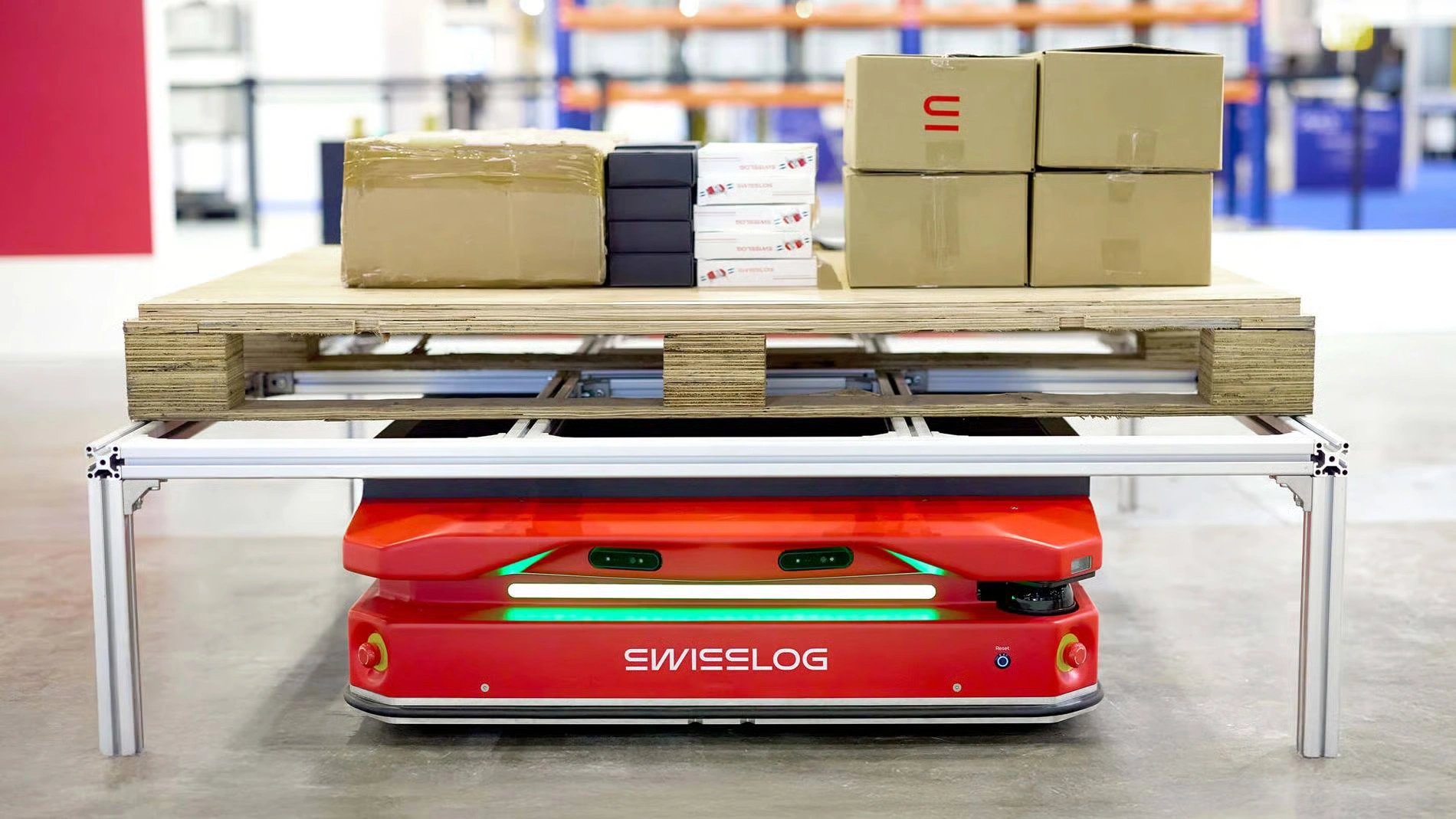
Visitors will experience a live demonstration of AutoStore, a compact goods-to-person system that stores products in a high-density grid and delivers bins directly to operators, helping businesses maximise storage within limited space and scale capacity as needs grow. With experience from over 400 AutoStore projects over 13 years, Swisslog covers full system design, deployment, optimisation and long-term support. The company will also showcase its IntraMove autonomous mobile robot, which moves loads of up to 3,000 kg with autonomous navigation that adapts routes, avoids obstacles and adjusts to changing transport points without fixed infrastructure. The scalable system grows by adding robots, while integration with SynQ software enables seamless transport order management across the warehouse.

Rami Younes, General Manager and Head of Sales at Swisslog Middle East, commented: “Across the MEA, the logistics market is projected to grow at 8.5% annually from 2026 to 2033, with warehousing and distribution expected to be its fastest-growing segment. This expansion is increasing pressure on businesses to respond to changing demand without creating inflexible operations. Swisslog aims to help Saudi organisations prepare for this next stage through automation that combines proven global technology with local expertise and lifecycle support. Saudi Warehousing & Logistics Expo gives us a valuable platform to demonstrate how this approach can support the Kingdom’s continued logistics transformation.”

Regional growth and customer momentum

The company’s client portfolio includes global and regional leaders such as AlMarai, Raha, RoboStores, Unilever, Pepsi, and more. Over the past year, Swisslog Middle East secured multi-million-dollar projects across Saudi Arabia, UAE, Kuwait and Oman. It has progressed the automation of Chalhoub Group’s flagship logistics hub in Riyadh’s SILZ Free Trade Zone, where a 67,000-bin AutoStore system with 42 robots supports scalable fulfilment for the fashion, beauty and luxury sectors.

The intralogistics leader has also completed a project for a leading automotive parts provider and continued work on grocery automation initiatives across the region. It has secured new projects in Saudi Arabia and its first AutoStore project in Oman for a government institution in Muscat. Swisslog plans to expand its regional workforce further in the coming months, strengthening its capacity to implement and support a growing portfolio of projects.

Global expertise supporting Vision 2030

Swisslog’s recent international deployments show how its integrated ASRS, robotics, and warehouse software can be applied across industries and operating needs. In Australia, an automated storage and retrieval system for Mondelēz combines high-density pallet ASRS with control software to improve throughput and inventory accuracy. At Satair’s Singapore facility, an AutoStore system enables fast, space-efficient access to around 80% of small and medium aircraft parts within a 1,000sqm footprint. In the USA, Medline’s installation uses AutoStore integration and warehouse control systems to improve picking efficiency and accuracy in healthcare distribution.

By combining its global systems integration experience with a growing regional team, Swisslog helps Saudi organisations improve warehouse performance and build future scalable capacity. The company supports Vision 2030’s goal of positioning the Kingdom as a global logistics hub by strengthening the efficiency, scalability and resilience of local supply chains.

Visitors to Saudi Warehousing & Logistics Expo are invited to attend Swisslog’s conference presentation and experience the AutoStore and IntraMove displays at the company’s booth.

Yango Group expands Great Place to Work certification from nine to 17 countries

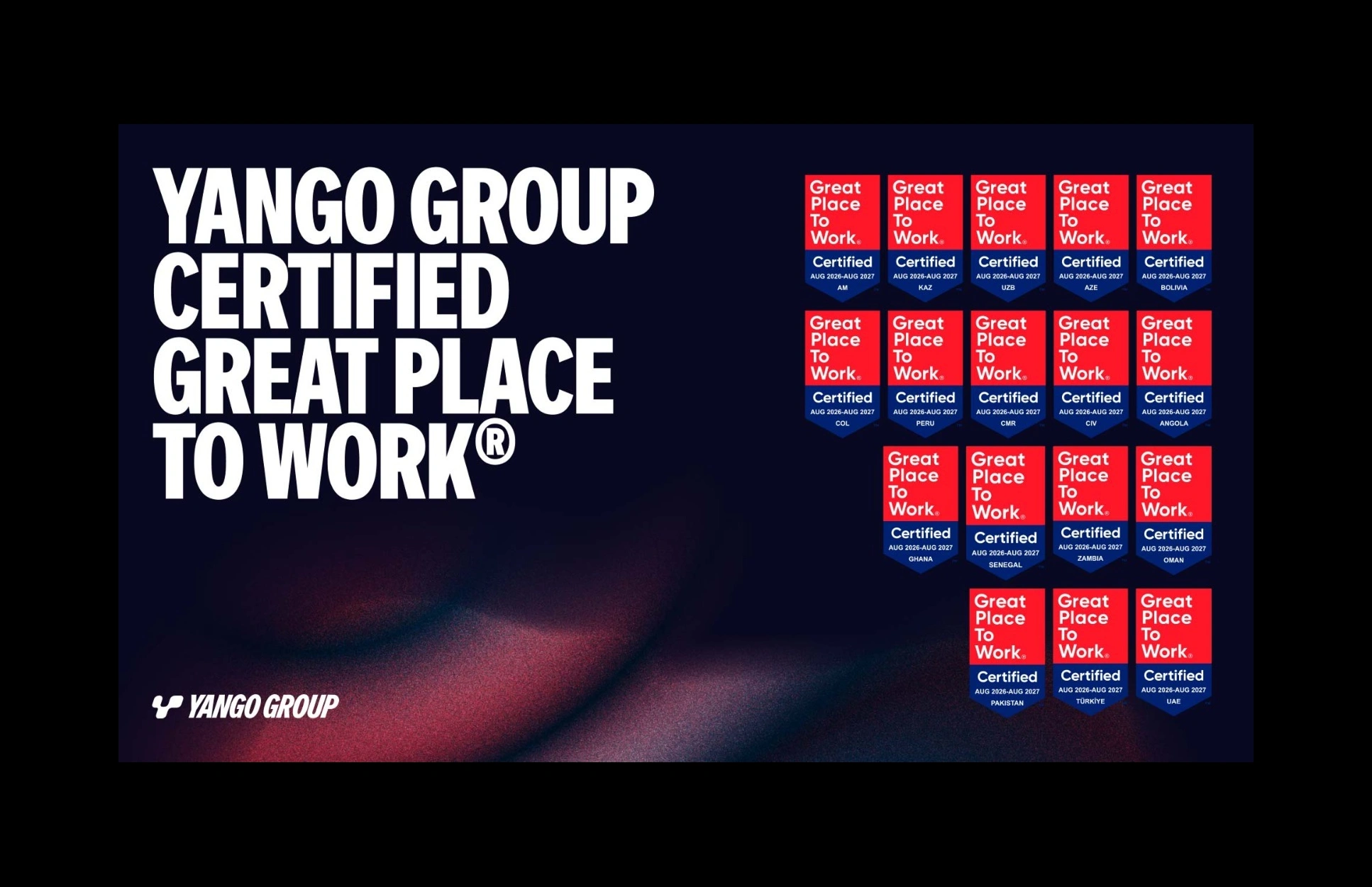
Dubai, UAE – August 31, 2026 — Yango Group, a UAE-based tech company, has expanded its Great Place to Work certification footprint from nine countries in 2025 to 17 in 2026. The latest certification cycle is based on feedback from 938 employees across the certified markets.

Across the 17 markets, 88% of surveyed employees said their organization is a great place to work. Among the strongest results, 96% said people are treated fairly regardless of gender, 94% said new employees are made to feel welcome, and 93% said people are given a lot of responsibility.

The 2026 certification spans Uzbekistan, Kazakhstan, Armenia, Azerbaijan, Türkiye, the UAE, Oman, Pakistan, Côte d’Ivoire, Ghana, Senegal, Zambia, Cameroon, Angola, Peru, Bolivia and Colombia — eight more countries than in 2025.

“These results are especially meaningful because they come from 17 very different markets. Yango’s global-to-local model gives local teams the freedom to make decisions based on what works in their markets, while staying connected through shared expertise and a common culture. Seeing employees across such different markets describe their experience so consistently tells us that this balance works: our teams can be deeply local while still sharing a common Yango culture,” said Daniil Shuleyko, CEO of Yango Group.

The results were strong across markets of different sizes and regions. In Uzbekistan, 95% of respondents said their organization is a great place to work, while the figure reached 92% in the UAE, 90% in Zambia and 88% in both Kazakhstan and Côte d’Ivoire. In Azerbaijan and Bolivia, 100% of respondents said their organization is a great place to work.

Programs such as Yangoversity, which brings together employees from multiple countries for shared learning, and Go to the Fields, which puts employees on the ground alongside partners, help teams exchange experience and build connections across markets.

Great Place to Work Certification is based on employee feedback about their workplace experience, including areas such as trust, fairness, respect, pride and belonging.

Earlier this year, Yango Group was named among the Best Workplaces in Technology Middle East 2026 by Great Place to Work.

PlanRadar AI Agents Close the Gap Between What Happens on a Project and What Gets Done

Dubai, UAE, 19 August 2026 – Today, PlanRadar, a leading platform for 360° digital documentation, communication and reporting in construction, facility management and real estate projects, announces PlanRadar AI Agents. Built to close the follow-up gap, AI Agents give teams time back and scale follow-up without adding headcount.

Every construction, real estate and facility management project depends on hundreds of small actions to keep moving, and until now, someone has had to step in and complete each one themselves. PlanRadar AI Agents change that, once an agent is triggered it completes the action itself, without an approval step, so results arrive the moment they’re needed rather than whenever someone gets to them.

PlanRadar customers can build their own agents using natural language prompts to automate workflows or draw on a collection of ready-made PlanRadar agents. The Response agent, for example, reads an incoming RFI, searches the project’s documents, and creates a reply with the exact source named, cutting the time to a first response from hours to minutes. Every agent action is logged and attributed, and customers can test exactly what an agent will do before it goes live, so teams stay in full control of what runs automatically.

For customers who want extra support, PlanRadar’s Forward Deployed Engineers work directly with teams to uncover and build the AI Agents use cases most valuable to their business, helping customers get their first agents live faster.

Ibrahim Imam, PlanRadar Group Co-CEO, comments: “Our customers want the routine work on a project to take care of itself, without giving up any control over what happens, and that is exactly what PlanRadar AI Agents deliver. Our agents catch what could otherwise slip through and turn into rework, so project teams can focus on the judgement calls only people can make. For PlanRadar customers, this shift means agents that get on with the work as it happens.”

Clemens Hammerl, Chief Product Officer at PlanRadar, adds: “Customers do not want another system to log into or another workspace to manage. They want more of their jobs completed from just one location. PlanRadar AI Agents run on existing project data, with each agent checked against its creator’s own access every time it runs, so nothing it does goes further than the person who built it could. Building an AI Agent is like briefing a new teammate, easy to describe in your own words, and ready to act every time you need it.

Every agent is built on that same principle, real autonomy matched with real control.”

The addition of AI Agents adds another layer of capability to PlanRadar, which already includes document management, reporting and integration features, enabling customers to connect all project processes in one place. General contractors, specialty contractors and project managers typically run the highest volumes of issues and inspections on a project and stand to benefit most as that work increasingly runs on its own.

AI Agents are built directly into PlanRadar and every agent runs within PlanRadar’s existing, ISO-certified security and data-protection standards, with no change to how project data is stored or processed. Full details on PlanRadar’s approach to data security and privacy are available at planradar.com/data-security-and-privacy-at-planradar.

PlanRadar AI Agents are available across all PlanRadar plans as part of the platform’s AI features. This first release is the start of a wider roadmap, with future versions set to expand what agents can do and where they can connect.

Snowflake to showcase the future of Agentic Enterprise at LEAP 2026

RIYADH, Saudi Arabia – 19 August 2026 – At LEAP 2026, Snowflake, the AI Data Cloud company, will showcase how organisations can build the Agentic Enterprise, where humans and intelligent agents work together to accelerate decisions and deliver measurable business outcomes. Customers, partners and industry experts will demonstrate how trusted data is enabling the next generation of AI innovation.

Snowflake will highlight how the AI Data Cloud is the AI Control Plane, connecting business intent with governed enterprise data and context so organisations can securely scale from generative AI applications to autonomous agentic systems, while retaining control over their data.

As part of its participation, Snowflake plans to announce a strategic initiative with Saudi Arabia’s Ministry of Communications and Information Technology (MCIT), reinforcing its long-term commitment to supporting the Kingdom’s digital transformation and AI ambitions.

Throughout LEAP, Snowflake will host a series of signing ceremonies with customers and partners, reflecting the company’s continued investment in Saudi Arabia’s growing AI ecosystem.

Michel Nader, Regional Vice President (RVP), Middle East, Turkey and Africa at Snowflake, said, “Saudi Arabia is rapidly establishing itself as one of the world’s leading AI economies, and organisations are now focused on building the governed operating models required for the Agentic Enterprise. At LEAP, we look forward to showing how customers and partners are converting trusted enterprise data into measurable outcomes, while strengthening our investment in the Kingdom’s growing AI ecosystem.”

Snowflake will showcase how organisations across industries are already using the AI Data Cloud to support their AI and data transformation journeys. KSA customer success stories featuring real estate developer Red Sea Global and intelligent manufacturing platform O3sigma will highlight real-world AI innovation, while business conglomerate Zahid Group will take to the booth stage to share their deployment journeys and the business outcomes achieved using Snowflake.

Live demonstrations will also bring Snowflake’s AI capabilities to different audiences across the enterprise. CoCo (formerly Cortex Code) gives technical teams a data-native coding agent that helps automate complex data and AI workflows through natural-language prompts, enabling projects to move from development to production faster. CoWork gives business users a personal work agent that can reason across structured and unstructured enterprise data. It can automate routine work and help employees turn trusted insights into action within Snowflake’s governance perimeter. Together, the demonstrations will show how organisations can extend secure AI from development teams into context-rich insights and intelligent decision-making.

Complementing these demonstrations, Snowflake’s technology ecosystem will be on display through daily presentations from ten strategic partners: AWS, Domo, Matillion, Datain, Fivetran, Alteryx, Hightouch, Tulapai, Dataplus and In516ht, highlighting how integrated technologies help organisations accelerate AI adoption across analytics, data integration, activation and governance.

Visitors will also be able to register for upcoming Snowflake Technical User Group (STUG) Saudi Arabia community events and participate in a range of networking activities throughout the exhibition.

Snowflake will further contribute to LEAP’s conference programme through two speaker sessions exploring both the strategic and technical evolution of enterprise AI.

On Day 1, Abu-Bakr Khan, AI GTM Lead at Snowflake, will present “Beyond the Pilot: The Economics of the Agentic Enterprise,” examining why the next phase of AI adoption is increasingly an economic and governance challenge rather than simply a technology challenge. The session will examine how organisations can assign each task to the appropriate model while managing cost and risk through a single auditable control layer. It will present a governed and measurable operating model designed to turn AI investment into accountable enterprise value.

On Day 3, Mohamed Touiti, Solutions Engineer Manager at Snowflake, will present “Intelligence in Motion: Powering Agentic Applications on Snowflake” on the Orbital Stage, demonstrating how the Snowflake AI Data Cloud and Cortex Agents enable organisations to build scalable agentic applications that transform enterprise data into near real-time business intelligence and measurable business outcomes.

Visitors can experience Snowflake’s latest AI innovations throughout LEAP 2026 at Hall 2, Stand H2.O10.

53% of Organizations Struggle to Translate Business Context Into AI Despite Rising AI Investment

August 18, 2026 — Alteryx, Inc., an AI-ready data and analytics company, today released its “2026 IT Leader Research: The State of AI Ownership, Agents, and ROI” report, revealing that organizations are entering a new phase of AI maturity where success is no longer defined by AI adoption alone, but by the ability to translate AI investment into measurable business outcomes.

Among 1,400 IT leaders surveyed globally, 80% expect AI spending to increase over the next two years, while 69% report moderate or significant ROI from their AI investments. Yet despite growing investment and early returns, more than half (53%) say their organization struggles to translate business context into AI systems and workflows. At the same time, 77% agree business context is critical to producing accurate and relevant AI outputs, underscoring a widening gap between AI ambition and operational readiness.

Key Findings at a Glance:

  • 80% of organizations expect AI spending to increase over the next two years.
  • 69% report moderate or significant ROI from their AI investments.
  • 93% of IT leaders are confident agentic AI could deliver measurable ROI for their enterprise within the next two years.
  • 77% agree business context is critical to accurate, relevant AI outputs.
  • 53% say their organization struggles to translate business context into AI systems and workflows.
  • Only 18% of organizations have achieved fully self-service access to cloud data for business users.

AI Investment Is Accelerating. Expectations Are Rising Even Faster.

AI investment continues to accelerate as organizations move beyond experimentation toward enterprise-scale deployment. Eighty percent of organizations expect AI spending to increase over the next two years across infrastructure, workflow automation, data platforms, and governance.

With that investment comes greater accountability. Technology leaders are increasingly measuring AI success through productivity improvements (53%), cost reduction (45%), and revenue growth or broader business impact (39%). More than one-third (35%) say the ability to measure AI ROI will be one of the capabilities that most distinguishes technology leaders from their peers.

The findings suggest AI has entered a new phase where organizations are no longer asking whether AI works. They are asking whether it consistently delivers measurable business value.

Business Context Is Emerging as a Barrier to Enterprise AI

As AI becomes embedded in everyday business processes, organizations are discovering that models alone are not enough. According to the research, 77% of IT leaders agree that business context, including the rules, definitions, and operational knowledge that shape how their organizations operate, is essential for producing accurate and relevant AI outputs. Yet more than half (53%) say their organization struggles to translate that business context into the systems and workflows AI depends on.

The challenge isn’t simply giving AI more data. It’s giving AI the business logic that tells it how the business actually works. While AI can analyze information and generate responses, it cannot consistently apply company-specific rules, policies, thresholds, and decision criteria unless that knowledge is built into the workflows it uses to make decisions.

Much of that business logic still lives in spreadsheets, macros, documentation, email threads, and the expertise of the people closest to the work. A financial forecast depends on assumptions. A tax process depends on rules and exceptions. A supply chain decision depends on inventory thresholds and timing. AI should be grounded in the rules and logic the business already trusts.

“Our research highlights a growing gap between AI ambition and enterprise-scale execution,” said Andy MacMillan, CEO of Alteryx. “Organizations have proven they’re willing to invest in AI, and many are already seeing returns. But scaling AI requires more than better models. It requires making the business knowledge people use every day available to the systems making decisions.”

Limited Data Access Continues to Slow AI Adoption

Despite years of investment in data democratization, only 18% of organizations report that business users have fully self-service access to cloud data. Most organizations continue to rely on IT or data teams for routine data access and analytics, with 38% describing a mixed model and 15% saying business users remain largely dependent on technical teams.

The findings suggest this dependency extends beyond productivity. The employees with the deepest understanding of how the business operates are often the same people waiting on IT to access the data needed to build, validate, and improve AI workflows. That disconnect makes it more difficult to embed business context into enterprise AI systems, limiting AI’s ability to generate meaningful business outcomes.

Enterprise AI Works Best When IT and the Business Work Together

The research also points to a growing consensus that AI performs best when technical expertise and business expertise work together. Two-thirds of technology leaders say AI and agent-based systems are most productive when managed within the line of business. Additionally, 71% believe AI initiatives are most successful when IT and business teams collaborate closely.

This sentiment correlates with past Alteryx research. Yet, strategy (37%) and delivery (38%) remain concentrated within IT, while business teams are most often responsible for defining requirements (30%). That disconnect between where business knowledge resides and where AI systems are built continues to slow enterprise AI adoption.

MacMillan concluded, “The organizations creating lasting value from AI will be the ones that operationalize their business logic so it becomes visible, governed, repeatable, and ready for AI.”

Yango Group introduces Dubai Mallathon’s first AI race commentator at Dubai Festival City

Dubai, UAE, 18 August 2026: Yango Group, a UAE-based technology company, will bring its AI and autonomous technologies into one of Dubai’s major community initiatives at Dubai Festival City Mall on 22 August. Yango Yasmina will become the AI race commentator, guiding and entertaining runners throughout the course with timely reminders, running and well-being tips, science and local facts, interactive prompts and encouragement,  while the company’s autonomous delivery robot will distribute water and present medals. Together, the activation illustrates how AI and robotics are moving beyond smartphones into everyday public life, making community events smarter and more interactive while supporting Dubai’s connected smart-city future.

Yango Group is a strategic partner of Dubai Mallathon, a citywide community wellness initiative launched by His Highness Sheikh Hamdan bin Mohammed bin Rashid Al Maktoum, Crown Prince of Dubai, Deputy Prime Minister and Minister of Defence of the UAE, and Chairman of The Executive Council of Dubai. It transforms shopping malls into indoor walking and running venues during the summer, encouraging residents to stay active in air-conditioned spaces. Dubai Festival City Mall will host 2.5 km, 5 km and 10 km races beginning at 6:00 AM on 22 August.

Before runners set off, Yango Yasmina will support the warm-up session alongside a professional coach, guiding participants with voice prompts and encouragement. During the race, instead of hearing a traditional announcer, runners will be accompanied by Yasmina throughout the course. The AI assistant will combine encouragement with practical running and well-being tips, hydration and pacing reminders, curious facts about the human body and exercise, local insights, and interactive prompts designed to keep participants engaged as they progress towards the finish line. Yasmina will also welcome runners as they cross the finish. As Dubai Mallathon’s first AI race commentator, Yasmina demonstrates how conversational AI can move beyond digital assistants and become part of real-world community experiences.

Alongside Yango Yasmina, Yango Group’s autonomous delivery robot will distribute water to participants and present medals to race winners, allowing visitors to experience autonomous technology in action. Equipped with cameras and AI-powered perception, the robot is designed to detect obstacles and navigate dynamic environments, showcasing technologies that support the future of intelligent delivery and service robotics.

“Instead of demonstrating AI in a conference hall, we’re bringing it into a real community setting where thousands of people can interact with it naturally. Dubai Mallathon gives us the opportunity to demonstrate that AI isn’t confined to screens or workplaces; it can also enrich public events, and become part of everyday life. With Yango  Yasmina and our autonomous delivery robot, we’re showcasing practical innovations that support Dubai’s vision for a smarter, more connected future,” said Islam Abdul Karim, Regional Head at Yango Group Middle East.

Participants will also be able to interact with AI speakers throughout the event, while the first three winners will each receive a Yango Yasmina AI speaker to continue exploring the AI assistant after race day.

Snowflake powers KSA’s Zahid Group’s data and AI transformation to unlock enterprise value

Jeddah, Saudi Arabia, 11 August 2026: Zahid Group, one of Saudi Arabia’s leading diversified business groups spanning heavy equipment, energy, transport and manufacturing, and others, has selected Snowflake, the AI Data Cloud company, as the strategic foundation for its enterprise data and AI transformation, giving the Group a scalable way to strengthen governance, advance AI adoption, and elevate customer experiences enterprise-wide. The relationship was formalized during a signing ceremony at Zahid Business Park in Jeddah, launching a multi-year investment that will strengthen productivity and support technology-led growth in line with Saudi Vision 2030.

With Snowflake, Zahid Group’s Digital Solutions Division is unifying data from across its business streams and departments on a governed, secure, centralized and scalable lakehouse platform. A modern business intelligence ecosystem will give leaders faster access to information, enabling them to spend less time reconciling reports and more time acting on insights. The next phase will use Snowflake Cortex AI to enable employees to engage with data through natural language, reducing reliance on traditional reporting and shortening the path from question to decision.

Snowflake’s adoption at Zahid Group comes as Saudi Arabia accelerates its goal of becoming the Middle East’s leading AI infrastructure and technology hub. The Council of Ministers has designated 2026 as the Year of AI, and PwC estimates that AI could contribute around 12.4% of the country’s GDP by 2030.

Before adopting Snowflake, Zahid Group’s data was dispersed across multiple systems, requiring extensive manual consolidation and resulting in reporting inconsistencies that slowed decision-making. As an early proof of value, the Caterpillar Helios initiative demonstrated the power of secure, real-time data sharing through Snowflake. Building on this foundation, Zahid Group is now extending Snowflake’s capabilities across its digital ecosystem, enabling real-time data streaming and integration with core platforms such as Infor and Salesforce.

This connected architecture has standardized critical reporting processes, reducing month-end reporting cycles from days to hours, and in many cases minutes. By eliminating manual effort and improving data consistency, it provides leaders with timely, trusted insights that support faster decision-making and strengthen a culture of data-driven innovation.

Suzan Sadek, Group IT Manager, Zahid Group, said: “Data is one of the most valuable assets of the digital economy. By choosing Snowflake, we are building a trusted and scalable data foundation that enables AI-driven innovation, faster decision-making, and improved customer experience. This transformation strengthens Zahid Group’s competitiveness, while supporting Saudi Arabia’s Vision 2030 ambition to create a data-driven economy.”

Michel Nader, General Manager for the Middle East, Turkey & Africa, Snowflake, said: “Zahid Group is demonstrating how trusted data can become the foundation for enterprise AI at scale. Snowflake brings information closer to customers while providing leading AI capabilities to enable digital transformation across Zahid’s operating environment. We are proud to support the company’s next phase too, where employees can access trusted insights faster and strengthen the Group’s ability to create lasting and scalable value across its businesses.”

Looking ahead, Zahid Group will expand Snowflake’s platform’s role across the Group, extending governed data products, advanced analytics and AI capabilities into more business functions to deliver measurable value for customers, partners and employees.

Snowflake Advances the Trusted Agentic Enterprise Era with Unified Monitoring and Cost Management

Snowflake establishes the foundation for trusted agent interoperability with new AI security innovations.

  • A Centralized AI Gateway for Every Agent: Snowflake’s new Cortex AI Gateway acts as the connective layer for all trusted agent activity, enabling governed agent interoperability, while giving enterprises visibility and control over AI consumption costs
  • Secure Third-Party Agent Access: Snowflake introduces the first wave of integrations with 1Password, Aembit, Linx Security, Okta, SailPoint, and Saviynt that help organizations consistently govern and audit agents across platforms
  • Built-in AI Security for the Agentic Era: BlackRock and Thomson Reuters enhance their security with Snowflake’s zero-trust principles for the agentic enterprise

Dubai, UAE – July 29, 2026 – Snowflake (NYSE: SNOW), the AI Data Cloud company, today introduced Cortex AI Gateway2 and several AI security innovations that establish the foundation for trusted agent interoperability, enabling organizations to securely scale their agentic enterprises. Cortex AI Gateway addresses two of the biggest barriers to enterprise AI adoption today by helping organizations secure AI agents, while providing centralized visibility and control over AI consumption costs.

As AI agents increasingly collaborate across enterprise data, apps, and platforms, they introduce unprecedented security and governance risks, while driving growing AI consumption across models and workloads. Traditional security architectures were not designed for this level of cross-system agent activity, and organizations often lack a centralized way to govern AI usage. This requires a new security and cost model where trust enables interoperability across every AI interaction. Today, Snowflake is solidifying the foundation for a secure agent ecosystem where agents can interoperate across the enterprise with the trust, visibility, control, and cost oversight businesses need.

Snowflake is unveiling Cortex AI Gateway, a major advancement that enables enterprises to securely control, orchestrate, and govern both first-party AI agents built within Snowflake, such as Snowflake CoWork and Snowflake CoCo, and third-party AI agents developed on external platforms such as Claude Code and Cursor. Cortex AI Gateway gives enterprises a unified foundation to govern how agents access models, tools, MCP servers, and enterprise systems; intelligently route agent requests; and optimize AI consumption across models and workloads. As a result, teams gain greater visibility and control across AI access, agent activity, and token usage to help prevent runaway AI costs.

Cortex AI Gateway builds on Snowflake’s acquisition of Natoma (May 2026), bringing Natoma’s enterprise MCP platform capabilities directly into the Snowflake platform for secure, enterprise-grade agent interoperability. Snowflake also announced new secure third-party agent access integrations4 with Aembit, 1Password, Linx Security, Okta, SailPoint, and Saviynt, setting a new standard for how enterprises govern and audit AI agents across the security ecosystem.

“Enterprise AI is moving from data interoperability to agent interoperability, and security has to be at the center of that shift,” said Mayank Upadhyay, Chief Security and Trust Officer, Snowflake. “Agent interoperability only works when enterprises can trust how agents from different platforms access data, invoke tools, and take action on behalf of users. Snowflake provides the visibility, governance, and control capabilities needed to make that interoperability secure for production AI. The future of the agentic enterprise will not be built in closed agent ecosystems, and Snowflake is the trusted control plane that enables secure enterprise work.”

Powering the Centralized AI Gateway for the Agentic Enterprise

For AI agents to deliver real business value, they need secure access to the models, data, applications, and tools that provide the full context of the enterprise. Today, those resources are fragmented across systems and providers, forcing teams to build and maintain custom connections while managing access, activity, and costs through disconnected controls.

Cortex AI Gateway advances Snowflake’s role as a secure AI interoperability layer for the agentic enterprise by establishing the gateway that helps enterprises centrally govern how AI agents access and use models, data, applications, and tools. For organizations like Meltwater, Cortex AI Gateway offers a path to make agents more useful, observable, and production-ready.

“At Meltwater, we help organizations make sense of fast-moving external data and turn insights into action. As AI becomes more embedded in that work, security and trust are critical to delivering value,” said Chief Technology Officer, Aditya Jami, Meltwater. “We see Cortex AI Gateway as a step towards ensuring our agents can securely connect to the right data and tools, helping us deliver trusted AI-powered insights faster while maintaining the security and control our customers expect.”

Cortex AI Gateway enables enterprises to:

  • Govern Every Agent Connection: Enterprises need a consistent way to control which models, data, applications, MCP servers, and tools each agent can access. With support for more than 100 MCP servers, Cortex AI Gateway centralizes agent access policies, authentication, permissions, and controls.
  • See and Understand Every Agent Action: As agents take action across enterprise systems, organizations need visibility into what each agent did, which systems and tools it accessed, and the sequence of steps it took. Cortex AI Gateway provides a centralized, end-to-end record of agent activity, giving teams the visibility needed to operate agents safely at scale.
  • Keep AI Consumption Costs Under Control: Fragmented AI usage across models, teams, and workloads makes AI consumption costs difficult to track and control. Cortex AI Gateway gives IT and finance teams a unified view of AI consumption, attributes costs to the teams, agents, or workloads driving them, and enforces spending limits to help prevent runaway costs before they occur.
  • Optimize Model Selection and Performance: Enterprises need the flexibility to use multiple models while ensuring each request is routed to the right model for the task. Cortex AI Gateway intelligently routes requests to enterprise-approved models, optimizing quality, cost, latency, and availability while maintaining centralized governance.

Advancing Secure Third-Party Agent Access with Ecosystem Partners

For AI agents to deliver meaningful business value, they need to work securely across platforms. Yet many vendors still default to closed ecosystems, making it difficult for third-party agents to operate across organizational boundaries. Security is the key to unlocking that interoperability by establishing the trust, identity, and access controls agents need to work safely across platforms.

Snowflake is laying the foundation for secure third-party agent access across the security ecosystem, with the first wave of integrations from leading security vendors including 1Password, Aembit, Linx Security, Okta, SailPoint, and Saviynt.

To enable enterprises to deploy third-party agents with consistent security and control, these integrations are designed to:

  • Make Third-Party Agents Governable: Enterprises can now move beyond the blind spot of agents acting under broad user credentials. With the new integrations, security teams have a clearer view into which agent accessed what data, through which platform, and under whose authority.
  • Enable Task-Scoped Agent Access: Third-party agents should not inherit every permission a user has just because they are acting on the user’s behalf. Snowflake’s approach limits agent access to only what the task requires, creating a safer model for using agents across an enterprise’s data ecosystem.
  • Extend Consistent Governance Across Agent Ecosystems: These integrations represent an important milestone for the security industry by helping unlock a pathway toward secure cross-platform agent interoperability.

Expanding AI Security for the Agentic Era

Snowflake is advancing enterprise security foundations across the areas that matter most for production-ready AI. This includes new advancements that enable security teams to better understand their AI risk posture1, provide agents with a verified identity1, protect sensitive data from improper use1, apply more context-aware controls3, and limit agent sessions to the scope required for the task3. By bringing zero-trust security to the agentic enterprise, Snowflake is helping enterprises like BlackRock and Thomson Reuters strengthen security, visibility, and control as they scale AI.

“At Thomson Reuters, building trusted AI for professionals requires strong security, governance, and visibility into how AI systems access data, use tools, and take action,” said Caitlin Halferty, Head of Data & Analytics, Thomson Reuters. “As AI becomes more deeply embedded in professional workflows, organizations need the ability to protect sensitive information and maintain clear controls without limiting innovation. Snowflake’s continued investment in AI security and governance supports the kind of trusted foundation enterprises need as they move agentic AI into production.”

Ecosystem Comments on the News

“AI agents are moving from assisting people to acting on their behalf across critical enterprise systems. The hard problem is no longer whether an agent can do useful work; it’s knowing which agent is acting, who authorized it, and what it is allowed to access,” said Nancy Wang, Chief Technology Officer, 1Password. “Our work with Snowflake is designed to give third-party agents short-lived, task-scoped access with clear human-to-agent attribution, so enterprises can move agents into production without giving them standing access to sensitive data.”

“AI agents are becoming active participants in enterprise systems, but securing them requires a fundamentally different approach than managing human access,” said David Goldschlag, CEO and Co-Founder, Aembit. “Through our work with Snowflake, we’re helping enterprises give third-party agents trusted, policy-based access to the resources they need, without relying on long-lived credentials, so they can reduce risk while enabling agents to operate securely at machine speed.”

“AI agents are introducing an entirely new class of identities into the enterprise that operate continuously, move across systems, and act on behalf of users,” said Niv Goldenberg, CPO and Co-Founder, Linx Security. “Together with Snowflake, Linx is helping organizations build a more complete picture of those agent identities and the access patterns around them, so security teams can identify risk earlier and govern agent activity without slowing innovation.”

“One of the biggest gaps in building a secure agentic enterprise is not knowing what your agents can connect to or what they’re allowed to do with that access,” said Ely Kahn, Chief Product Officer, Okta. “Through our work with Snowflake and our broader effort to advance Cross App Access as an open protocol for secure AI agent connections, our joint customers can bring third-party AI agents within the identity perimeter. Together, we’re helping ensure agents can operate within centralized identity policy, where every action is logged, and access is tightly scoped, before unlocking valuable enterprise data in Snowflake.”

“Agentic AI creates a major opportunity for productivity, but enterprises need trust, visibility, governance, and protection before they can capture that value at scale,” said Chandra Gnanasambandam, EVP of Product and Chief Technology Officer, SailPoint. “Through our integration with Snowflake, SailPoint helps organizations govern third-party agent access, giving them the visibility, accountability, and control needed to move agents into production with confidence.”

“Traditional identity security models were built for human users, not AI agents, creating a critical gap in enterprise security,” said Akhil Kapoor, Senior Vice President, Business Development, Saviynt. “Our integration with Snowflake addresses this challenge through Saviynt’s Access Gateway, which evaluates agent intent, context, permissions, and risk at runtime to ensure AI agents are only authorized to perform the actions required for a specific task. It prevents privilege misuse and anomalous activity before it can impact the business.”

pr firms in dubai

YOUR LETTER IS SENT!

WE WILL CONTACT YOU SOON.